
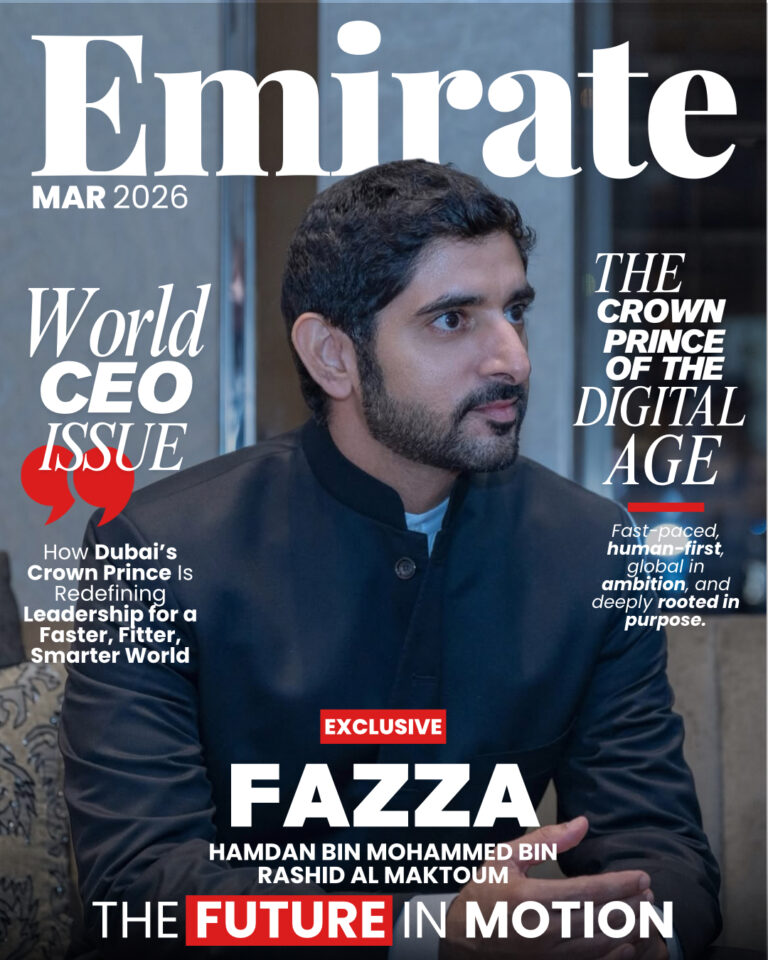
In the global conversation about leadership, there are rulers, there are reformers, and then there are architects of eras.
Sheikh Hamdan bin Mohammed bin Rashid Al Maktoum belongs to the third category.
Known across the world as Fazza, the Crown Prince of Dubai represents a rare modern leadership archetype — one that combines strategic governance, disciplined execution, athletic resilience, cultural identity, and digital-era visibility.
Since being appointed Crown Prince of Dubai in 2008, Sheikh Hamdan has steadily evolved into one of the most influential young leaders in the Middle East. Today, he serves not only as Chairman of The Executive Council of Dubai, guiding the emirate’s strategic policies and performance, but also as Deputy Prime Minister and Minister of Defence of the United Arab Emirates, reflecting the growing national and international weight of his role.
This is not ceremonial leadership.
This is structural leadership.
A Foundation Built on Discipline and Global Perspective
Born on 14 November 1982 in Dubai, Sheikh Hamdan was shaped by both tradition and global exposure. Educated in Dubai before attending the Royal Military Academy Sandhurst in the United Kingdom, he absorbed the discipline of military training and the rigor of structured command. Further academic exposure to global economics and governance strengthened his ability to think beyond borders.
Yet those who observe him closely note that his most influential education came from proximity — learning directly from his father, His Highness Sheikh Mohammed bin Rashid Al Maktoum, the visionary behind Dubai’s transformation into a global powerhouse.
The result is a leadership style that blends decisiveness with foresight and bold ambition with grounded values.
Steering Dubai’s Long-Term Economic Strategy
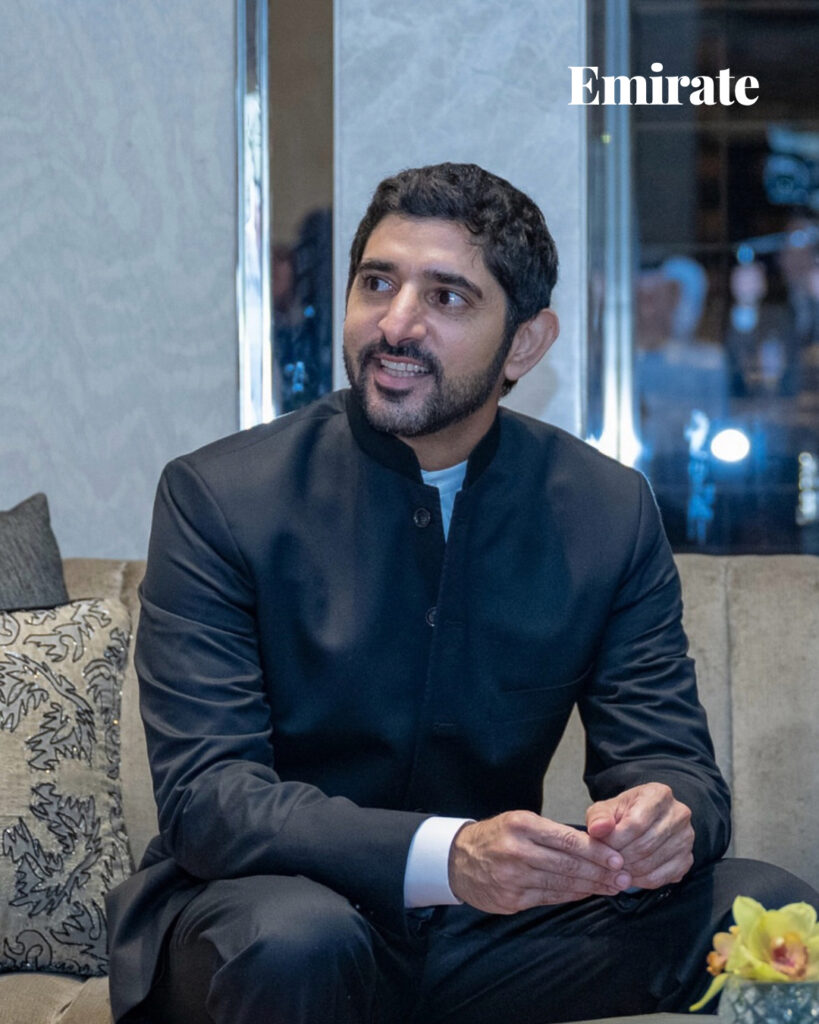
As Chairman of The Executive Council of Dubai, Sheikh Hamdan plays a central role in shaping the emirate’s long-term development agenda. Under his stewardship, Dubai’s strategic roadmap continues to align with ambitious economic expansion, urban excellence, sustainability, and global competitiveness.
Dubai Plan 2033, infrastructure modernization, quality-of-life enhancement, and business ecosystem development all operate within frameworks that prioritize performance, measurable outcomes, and global positioning.
The philosophy is clear:
Dubai does not compete regionally.
Dubai competes globally.
Recent strategic approvals have focused on urban master plans, public space transformation, economic diversification, digital infrastructure, entrepreneurship support, and making Dubai one of the most liveable and business-friendly cities in the world.
It is leadership rooted in execution.
National Responsibility: Defence and Generational Transition
In July 2024, Sheikh Hamdan was appointed Deputy Prime Minister and Minister of Defence of the UAE, marking a significant generational shift in federal leadership.
This appointment positioned him at the heart of national security and strategic defence planning, reinforcing the UAE’s emphasis on modernization, readiness, and international cooperation. Within a year of assuming the role, he was promoted to the rank of Lieutenant General in the UAE Armed Forces — a recognition of institutional trust and national responsibility.
Balancing economic governance at the emirate level with defence leadership at the federal level reflects a broader narrative: the UAE is preparing for the next chapter, and Sheikh Hamdan is central to that preparation.
Leadership Beyond Policy: The Human Dimension
While many leaders operate within boardrooms and government chambers, Sheikh Hamdan’s influence extends into daily life.
The Dubai Fitness Challenge, launched in 2017, transformed a simple idea — 30 minutes of activity for 30 days — into a citywide cultural movement. What began as a wellness initiative evolved into a global case study in civic engagement, productivity, and human capital enhancement.
In a city driven by ambition, the message was simple:
Strong cities require strong people.
His leadership consistently emphasizes physical wellbeing, resilience, discipline, and community participation — values that resonate deeply with both citizens and expatriates.
The Global Face of Modern Royalty
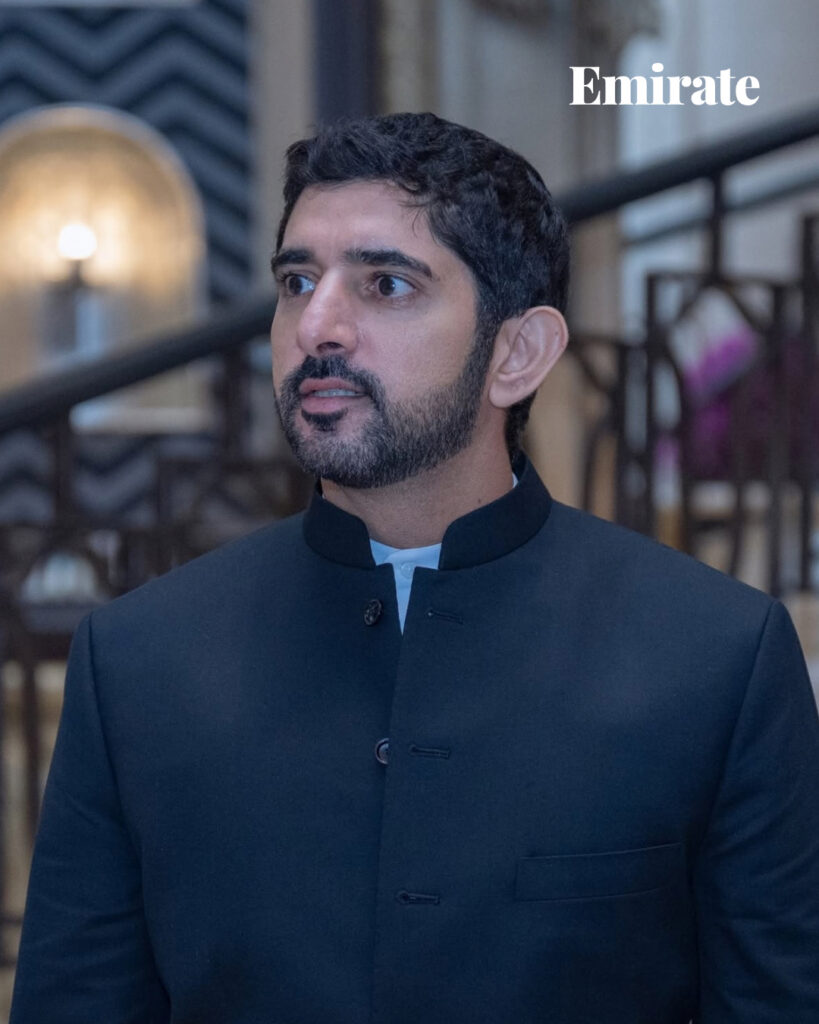
With one of the most followed royal social media presences in the world, Sheikh Hamdan represents a new generation of visible leadership.
He shares moments of fatherhood, athletic pursuits, official engagements, nature, and poetry — humanizing authority without diluting it. His pen name, Fazza, meaning “the one who helps,” reflects an identity rooted in service.
This digital transparency strengthens trust and builds emotional proximity between leadership and people — a hallmark of modern governance.
Culture, Identity, and Future Vision
Sheikh Hamdan’s leadership also protects cultural continuity. Initiatives celebrating Emirati heritage, community bonds, and national identity coexist with innovation, space exploration, AI integration, and digital transformation.
He stands at the intersection of tradition and technology.
That balance is what makes Dubai’s model compelling to global CEOs and policymakers alike:
Preserve identity.
Accelerate progress.
Compete without losing culture.
The CEO Perspective: Why Fazza Matters Globally
For business leaders, investors, and founders observing Dubai’s rise, Sheikh Hamdan represents more than royalty. He represents a governance model that integrates:
- Long-term economic planning
- Agile decision-making
- Public engagement
- Human capital development
- National security modernization
- Global branding excellence
In a world where leadership often feels reactive, his approach appears deliberate and forward-leaning.
Dubai’s skyline may symbolize ambition, but its leadership structure symbolizes continuity.
The Era Ahead
The next decade will test every global economy. It will reward cities that combine infrastructure with intelligence, ambition with agility, and governance with empathy.
Sheikh Hamdan bin Mohammed bin Rashid Al Maktoum stands at the forefront of that transition.
Not simply as the Crown Prince of Dubai.
But as the architect of a future-ready leadership model — one defined by discipline, innovation, and unwavering commitment to progress.
This is not leadership for today.
This is leadership built for the next fifty years.