

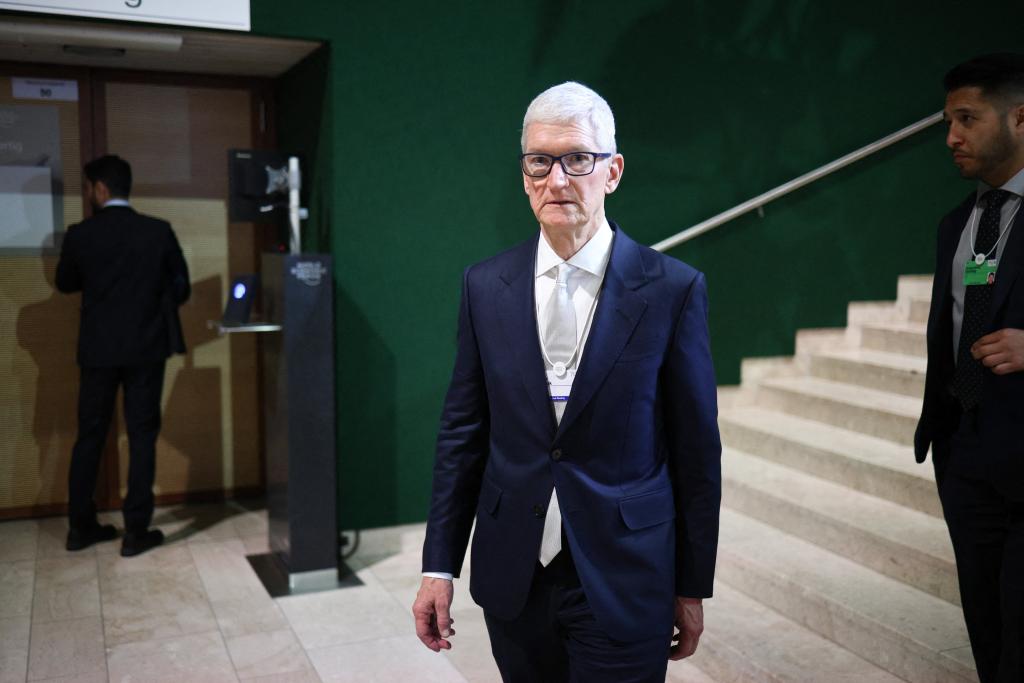
Sen. Marsha Blackburn is demanding answers from Apple CEO Tim Cook following allegations that Apple Inc. has “systematically suppressed” conservative media outlets within its widely used Apple News app.
In a letter published Friday, the Tennessee Republican cited exclusive reporting on a study conducted by the Media Research Center (MRC), which found that Apple News did not feature a single article from a right-leaning outlet among its “top stories.”
“The American public increasingly relies on services like Apple News to provide them with information, and they deserve to have access to perspectives across the political spectrum,” Blackburn wrote. “To deny consumers that ability through algorithmic promotion or editorial bias is a disservice to those who use your product.”
Findings of Suppression
According to the MRC study, of 620 stories featured in high-traffic morning time slots in January, 440 originated from left-leaning outlets and 180 from centrist sources. Right-leaning outlets — including The Post and Fox News — were reportedly absent from those featured slots.
The study further claimed Apple News went 99 consecutive days without promoting a conservative news story before featuring a Fox News article about the death of actor James Van Der Beek.
Blackburn has given Cook a March 4 deadline to respond to a series of pointed questions, including whether Apple News has “ever excluded or deprioritized content from right-leaning outlets based on anti-conservative bias.”
She is also seeking clarity on the internal editorial procedures used to determine which stories are highlighted, and whether Apple has conducted or commissioned an independent audit to assess potential political bias within its algorithms.
“You have a responsibility to offer access to information without favor or bias toward one political party,” Blackburn wrote.
Apple did not immediately respond to requests for comment. Cook has yet to publicly address the allegations.
Federal Scrutiny Expands
The controversy has also drawn attention from federal regulators.
Earlier this month, Andrew Ferguson, chairman of the Federal Trade Commission, sent a letter to Cook warning that Apple could potentially violate federal consumer protection laws if it is intentionally suppressing coverage by conservative outlets.

“The First Amendment protects the speech of Big Tech firms,” Ferguson wrote. “But the First Amendment has never extended its protection to material misrepresentations made to consumers, nor does it immunize speakers from conduct that Congress has deemed unfair under the FTC Act, even if that conduct involves speech.”
The warning signals that beyond political debate, the matter could evolve into a regulatory issue depending on findings.
Additional Research Raises Concerns
A separate study by AllSides, a nonpartisan group that classifies outlets by political leaning, reached similar conclusions.
During a two-week period last October, AllSides found that Apple News did not feature a single article from a right-leaning source in its “top stories” section. Of 166 articles reviewed in that study, just 2% came from conservative outlets, compared to 50% from left-leaning sources and 23% from centrist outlets.
AllSides focused specifically on sections of the app that cannot be personalized by users — including the “top stories” and “trending stories” feeds — which are curated either by Apple’s in-house editorial team or through algorithmic selection.
“Apple News’ model inflames political polarization in America by ensconcing readers inside a one-sided bubble of information that can manipulate and blind them,” said Julie Mastrine, director of AllSides’ media bias rating system and one of the study’s authors.

A Broader Debate Over Big Tech and Bias
The dispute underscores an ongoing national debate about the role of large technology platforms in shaping public discourse. Critics argue that algorithmic curation can influence perception and limit ideological diversity, while technology companies often maintain that their systems prioritize relevance, engagement, and editorial standards rather than political alignment.
For Blackburn and other critics, however, the issue centers on transparency and fairness.
With a March 4 deadline approaching and regulatory scrutiny intensifying, Apple now faces mounting pressure to clarify how its news aggregation platform selects and promotes content — and whether political balance is part of that equation.
The outcome could have implications not only for Apple News, but for the broader conversation about how Americans consume information in the digital age.